Translate to multiple languages

Subscribe to my Email updates

https://feedburner.google.com/fb/a/mailverify?uri=helgeScherlundelearning
Enjoy what you've read, make sure you subscribe to my Email Updates

Thursday, October 20, 2016

Online education – the way forward for 10 million hungry Indian minds | YourStory.com

Photo: Ashwin Damera
"Today, we have blended learning, online courses and Massive Open Online Course (MOOCs)." summarizes Ashwin Damera, Executive Director, Emeritus Institute of Management. 

Photo: Shutterstock

Education is the key to inclusive growth in any society. India is a young country with nearly 300 million people in the 19-35 age group. Based on the recent FICCI–EY report, currently India’s gross enrolment at 22 percent (30 million) is one of the lowest in the world, compared to 90 percent in the US, 62 percent in the UK and 31 percent in China. If we need to push our ratio even high enough to match China’s, then that amounts to educating an additional 15 million students – which seems like an overwhelming task, especially through our traditional brick-and-mortar education system.

The traditional education throws two major hurdles our way – accessibility and financial affordability. Business education is very expensive in India, especially considering the ROI on them. The tuition fees for premier B-schools in India are very high and they spike periodically. This situation pushes a majority of applicants to the lower tier schools, which have a mixed track record with respect to their placements. A working professional who is evaluating going to a business school in India may be extremely discouraged when (s)he takes into account the tuition costs, living expenses and most importantly the loss of pay during the period of education in a full-time programme. Of course, the lucky few who bag a great placement after the course may get a strong ROI for their time and money invested in a top tier B-school.

If we consider the distance learning method in India, it lacks the quality to deliver desired results. Of the 30 million higher education students, approximately five million are distance learning students. This means they receive self-study materials and enroll for end-of-term examinations. The system seems scalable and eliminates the need for additional infrastructure, but the students barely learn anything, have no professional guidance and lack the skills to tackle real-world problems. These students often end up in the lowest rung in terms of employability.

Technological disruption in education – our only ray of hope
Technology has disrupted industries across the globe and even in India, especially the retail, information accessibility and communication sectors. Now a fundamental change driven by technology has entered the education sector.
The latest developments in technology offer competitive and effective alternatives to traditional teaching. Today, we have blended learning, online courses and Massive Open Online Course (MOOCs). Each leverages IT infrastructure in varying degrees. Online learning is sweeping away the ground beneath us as we know it and replacing it with globalised, technology-enabled world of teaching and learning.
The year 2015 alone has witnessed nearly 591 edtech startups in India.

The annual increase in the edtech startups indicates that Indian students are voracious online learners. Class Central indicates that nearly 35 million students across the world have enrolled for online courses in 2015, as compared to 15 million in 2014. And nearly 10 percent of these students are Indians! Over the last few years, online learning has shown impressive growth numbers, thus drawing investors’ attention. Mark Zuckerberg and his wife's, Priscilla Chan, Chan Zuckerberg Initiative, made its first investment in Asia in Bengaluru-based Byju’s, a mobile-based online learning company. This company is already backed by Sequoia Capital and Sofina, among others – and this is a clear indication of how this sector is being perceived.
Read more...

Source: YourStory.com

How the digital age changes literacy education | Deseret News

Follow on Twitter as @ChandraMJohnson

"In most U.S. schools, it used to be that children were expected to arrive at kindergarten ready to read — mastering the alphabet and beginning to sound words out on their own." according to Chandra Johnson, Utah transplant who has covered the justice system, education, social services and politics. 

For both parents and teachers trying to lift the dismal U.S. literacy rates, the “new literacy” is a delicate problem, requiring parents and schools to strike a balance between time spent on a screen and time spent with printed materials.
Photo: Adobe Stock

But if a child arrives at school with just their ABCs and 123s, it might not be enough, says University of Nevada literacy professor Diane Barone.

“It creates a double disadvantage for kids if the home doesn’t have a lot of books in it and they don’t have computers or internet access,” Barone said. “It’s hard if they don’t see a lot of technology before they come to school because other kids have seen it since they were 2 or 3. It’s worrisome.”

Literacy used to mean the ability to read and write, but in recent years, that term has become an umbrella for reading, writing and digital skills that run the gamut from typing to intuitively understanding how to interact with both computers and other devices, as well as an early grasp that everything online must be vetted.

“We now have a new definition of literacy where we’re trying to bring the ideas of digital literacy and print literacy together,” said Julie Todaro, president of the American Library Association.

Today, a child who arrives in class ready to read might actually be considered “behind” if they don’t also know how to interact with tablet or computer activities teachers increasingly employ in classrooms.

American kids have struggled with literacy for years. According to the National Education Association’s Nation’s Report Card, literacy rates for kids have plateaued over the past few years. In 2015, the NEA found that reading proficiency changed little from previous years, with just 36 percent of American fourth-graders and 34 percent of eighth-graders reading at or above their grade level. Among adults, literacy rates have changed little over the past decade. Between 1992 and 2003, the National Assessment of Adult Literacy reports that the number of American adults who can’t read hovered at 14 percent.

“This is a crisis,” said Reading is Fundamental president Alicia Levi. “Technology should enable learning for kids, but it shouldn’t replace the fundamental foundation of literacy, which is putting a book in a child’s hand.”

For both parents and teachers trying to lift the U.S.’s dismal literacy rates, the “new literacy” is a delicate problem, requiring parents and schools to strike a perfect balance between time spent on a screen and time spent with printed media —favoring one or the other too much may inadvertently put them at a disadvantage in school. The problem, experts say, is that the focus is too often on the digital aspect of literacy.

“Instead of focusing on what’s on the screen, we’re focused on whether or not they can work the device. Those are two very different things,” Todaro said. “Computers deliver print content. They’re not worth much if kids can’t read and understand what’s on the screen.”

Finding the best tools
Given the rates at which young children interact with a screen today, the number of children who are first exposed to written language via a screen has undoubtedly increased. In fact, Northwestern University found in 2013 that more than a third of parents gave tablets to their children ages 0 to 8, while the Kaiser Family Foundation estimates that children 8-18 spend almost eight hours a day in front of a screen. Critics of children being introduced to language in electronic format say technology has limits to its success.

A child begins to read through a process Barone calls “decoding,” or learning to associate words with the real-life things they describe and sounding words out on the page. Decoding is where e-reading and apps shine because they have built-in tools to aid with the process, like reading highlighted words to kids or helping them sound a word out. But that’s about the extent of its usefulness to children learning to read, Barone said, likely because that’s what the majority of such apps are designed for — beginning literacy, nothing more.

“It’s about what these apps can do,” Barone said. “Right now, they’re doing a great job with early literacy, but they don’t do a great job on vocabulary and they don’t do a great job with comprehension.”

That’s why literacy experts say modern children need a healthy mix of reading material to boost both their reading skills and their digital skills. Books need to be worked into the mix, they say, because they require someone to read to the child and it's a different way for kids to familiarize themselves with language. Tablets can help with decoding and they definitely boost children's digital skills, but when children are left alone to read or use tablets, they're less likely to understand what they're absorbing.

“We’re great at giving them technology and they need it," Todaro said, adding that it's difficult to do anything in life without knowing how to interact with a computer or tablet. “But we’re so focused on digital literacy and getting them technology that we’re not as focused on what they really need, which is information literacy — being able to understand and think critically about what they find on the devices.”

Yet some literacy experts say it’s easy to overlook the power of technology for combatting illiteracy. Steve Vosloo, head of mobile learning with Pearson education company's South Africa branch, says for developing countries like South Africa or India, being able to read on a screen is often the only option. Where many communities Vosloo works with have few books, smartphones are fairly prevalent. Speaking via Skype from Cape Town, Vosloo chuckled at the idea of teachers or parents in America worrying about children learning to read on a device vs. a book.

“It’s not about paper or pixels, it’s about reading,” Vosloo said. “Technology isn’t a silver bullet, but if you don’t have access to printed books at least this way you do have access to reading.”

Vosloo says he prefers books as tools for literacy, but he says there’s no hard and fast rule that makes them “better” for learning to read, especially in countries where print books are scarce.

Vosloo has studied the impact of technology on literacy and from his perspective it’s minimal. The biggest example is a study Vosloo conducted on so-called “text speak,” a trend in the U.K. where students increasingly turn in homework and interact with common text abbreviations. But the concerns about “text speak” being a sign of eroding literacy are overblown, Vosloo said, mostly because kids in the developed world learn to read and write in English before they adopt “text speak.” But even in Cape Town, where Vosloo says many children speak a blend of English and Zulu, text speak is actually a sign of literacy.

Children there learn to speak English in classrooms where writing isn’t done, so children learn text speak using mobile phones before they know how to write it. It’s corrected as the children learn how to read and write English. It’s remarkable, in a way, that they’re learning to write phonetically correct English without having seen much written English.

To Vosloo, that’s potential that can’t be denied.

“There’s a potential for communities of readers that wouldn’t be here otherwise,” Vosloo said. “For countries and communities anywhere where there aren’t many printed books but there are digital alternatives, we should be open to that.”
Read more...

Source: Deseret News 

Winnipeg students learn about 'unknown' Ukrainian genocide aboard mobile classroom | CBC.ca

"Mobile classroom teaches students about Holodomor genocide, extermination by hunger" continues CBC.

The Holodomor Mobile Classroom can fit 33 students at once and has an 8½-metre long video wall inside that plays historical programming about the genocide. 
Photo: (CBC)

A group of Winnipeg students just got a chance to learn about an "unknown" Ukrainian genocide in an interactive classroom on wheels.

The 12-metre-long Holodomor Mobile Classroom rolled up to Sisler High School Tuesday. Students from two history classes were invited inside the mobile learning centre, where they took part in an hour-long interactive lesson about the Holodomor genocide, or extermination by hunger.

"It's 'unknown' in the fact that it's been covered up, it's been denied and it hasn't been recognized throughout the world," said Roma Dzerowicz, executive director of the tour.

"Our goal is to create awareness amongst Canadians of the Holodomor, and at the same time bringing to light a genocide where people were killed for who they were.... In today's world, we do not stand for intolerance, injustices; we stand for democratic and human rights."

More than four million Ukrainians died during the famine between 1932 and 1933, according to the Canada Ukraine Foundation. The Holodomor genocide was engineered by Joseph Stalin to starve Ukrainians and crush the country's independence movement, the foundation says.

Inside the bus, students had a chance to follow lessons projected onto an 8½-metre long video wall while following along on iPads.
Read more... 

Source: CBC.ca

Wednesday, October 19, 2016

Why policy needs philosophers as much as it needs science | The Guardian


"Philosophers could help policy makers to ask the right questions. But to give this practical help, academic philosophy must take lessons from open science." writes Adam Briggle and Robert Frodeman, they teach in the Department of Philosophy and Religion at the University of North Texas. They are co-authors of Socrates Tenured: The Institutions of 21st Century Philosophy.

A Greek flag flutters by a statue of the philosopher Socrates in central Athens. 
Photograph: Yannis Behrakis/Reuters

In a widely-discussed recent essay for the New Atlantis, the policy scholar Daniel Sarewitz argues that science is in deep trouble. While modern research remains wondrously productive, its results are more ambiguous, contestable and dubious than ever before. This problem isn’t caused by a lack of funding or of scientific rigour. Rather, Sarewitz argues that we need to let go of a longstanding and cherished cultural belief – that science consists of uniquely objective knowledge that can put an end to political controversies. Science can inform our thinking; but there is no escaping politics.

Sarewitz, however, fails to note the corollary to his argument: that a change in our expectations concerning the use of science for policy implies the need to make something like philosophical deliberation more central to decision making.

Philosophy relevant? We had better hope so. Because the alternative is value fundamentalism, where rather than offering reasons for our values, we resort to dogmatically asserting them. This is a prescription for political dysfunction – a result increasingly common on both sides of the Atlantic.
 
Of course, deliberating over values is no more a magic bullet than science has turned out to be. But whether we are talking about scientific results, or ethical, social and political values, a lack of certainty does not mean that evidence cannot be marshalled and reasons cannot be given.

Practically speaking, this implies employing individuals with philosophical training in a wide variety of policy and regulatory institutions: not as specialists whose job is to provide answers, but to ask the right kinds of questions.

As it is currently constituted, academic philosophy is not up to this task. A premium is placed on theoretical rigor, at the loss of social significance. This reflects the institutional form that philosophy has taken. Prior to the twentieth century, philosophers could be found in a variety of occupations. Since 1900, however, they have had only one home – the university, and within it, that peculiar institution known as the ‘department’. Philosophy departments ghettoize ideas, steering philosophers toward problems of interest to their disciplinary colleagues – at the cost of practical relevance to wider societal concerns. Even applied philosophers suffer from a form of disciplinary capture.

Indeed, what Sarewitz says of academic science is painfully true of most philosophy and of the humanities generally. Philosophers have mimicked scientists in all the worst ways: practicing a highly specialised discipline and speaking primarily to one another. One telling sign of this: of the approximately 110 PhD programs in philosophy in the United States, not a single one emphasises the importance of training graduate students to work outside of the academy.
Read more... 

Source: The Guardian

How quantum effects could improve artificial intelligence | Phys.Org

"Over the past few decades, quantum effects have greatly improved many areas of information science, including computing, cryptography, and secure communication." summarizes Lisa Zyga.

More recently, research has suggested that quantum effects could offer similar advantages for the emerging field of quantum machine learning (a subfield of artificial intelligence), leading to more intelligent machines that learn quickly and efficiently by interacting with their environments.
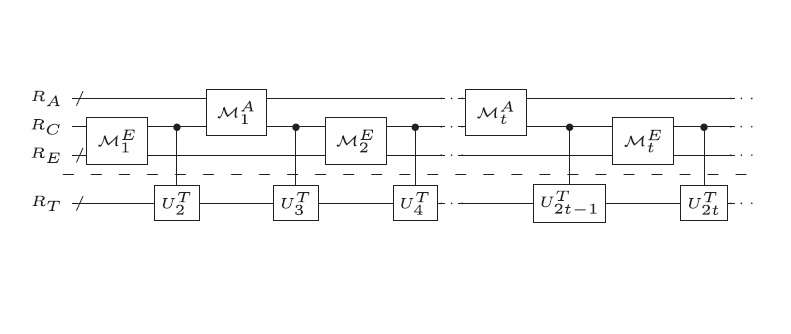
Physicists have shown that quantum effects have the potential to significantly improve a variety of interactive learning tasks in machine learning. This figure shows a tested agent-environment interaction. 
Credit: Dunjko et al. ©2016 American Physical Society

In a new study published in Physical Review Letters, Vedran Dunjko and coauthors have added to this research, showing that quantum effects can likely offer significant benefits to .


"The progress in machine learning critically relies on processing power," Dunjko, a physicist at the University of Innsbruck in Austria, told Phys.org. "Moreover, the type of underlying information processing that many aspects of machine learning rely upon is particularly amenable to quantum enhancements. As quantum technologies emerge, quantum machine learning will play an instrumental role in our society—including deepening our understanding of climate change, assisting in the development of new medicine and therapies, and also in settings relying on learning through interaction, which is vital in automated cars and smart factories."

In the new study, the researchers' main result is that quantum effects can help improve , which is one of the three main branches of machine learning. They showed that quantum effects have the potential to provide quadratic improvements in learning efficiency, as well as exponential improvements in performance for short periods of time when compared to classical techniques for a wide class of learning problems.

While other research groups have previously shown that quantum effects can offer improvements for the other two main branches of machine learning (supervised and unsupervised learning), reinforcement learning has not been as widely investigated from a quantum perspective. 
Read more... 

Additional resources
Vedran Dunjko, Jacob M. Taylor, and Hans J. Briegel. "Quantum-Enhanced Machined Learning." Physical Review Letters. DOI: 10.1103/PhysRevLett.117.130501

Source: Phys.Org

Will this be the classroom of 2050? | GovInsider

"Temasek Polytechnic plans to use virtual assistance, facial recognition and data tracking in the classroom." notes .

“We tend to teach the way we were taught”, Tang Ming Fai, Director of Computer and Information Systems at Singapore’s Temasek Polytechnic, tells GovInsider. 

Photo: Tang Ming Fai

But it’s out with the old – teachers now should adapt to the times. The “way we assess and engage students are different”, he says, and teachers must have a “willingness to experiment”.

How is Temasek Polytechnic gearing up for change? We caught up with Tang to find out more.

Facial recognition in classrooms


His team is looking into the use of facial recognition in classes, so lecturers will know when students start losing interest. “We want to see, when the lecturer delivers the lectures, whether the students are paying attention – do they grasp the idea or they show a doubtful face?”, he says. This will help lecturers intercede in their learning journey before exams, which would otherwise be “too late”, Tang says.

The analysis will be anonymised so that individual students’ identities are not revealed. “We do have to respect the students’ privacy”, he asserts. “That means we don’t go down to the individual student to say ‘this person was lost’, or ‘this person smiled’”. Machine learning will crunch out the analysis and give an aggregate review of class emotions. “This way, I feel that the personal privacy is being protected, yet still able to benefit the class and lecturer”.

The school also wants to train teachers to build personalised performance dashboard, so they can track the progress of students efficiently. He wants to give lecturers free reign on how they monitor and analyse data, as they understand their class the best. “We may not build the best dashboard for them, because we do not know the business domain – how they want to monitor or analyse the data”, he says, so instead, the school teaches them “how to fish” by providing them with data sources.

This helps lecturers to intervene in their students’ academic progress. Key metrics can include attendance, for instance. If a student “is not doing well because he has not been attending class, then it has nothing to do with the teaching method”, rather, it is an attitude problem, Tang explains. The school can then engage the student to understand what is wrong. “This helps to break down the problem”.

Further, Tang’s team is keen to roll out virtual assistants to serve students and staff. “We try to have a lot of answers, and then anticipate what you ask and offer you the best answer”, he says. This can be used in libraries, and to answer public queries; and services can range from online to voice platforms.
Read more...

Source: GovInsider

How can government implement machine learning? | GovInsider

"The technique can help officials get insights from data and predict needs." inform GovInsider.

Photo: jimbotfuzz, licensed under CC BY-ND 2.0

Machine learning is one of the latest trends in government. How can it help civil servants predict and personalise services?

Healthcare is a particularly good sector to learn from because each person’s DNA makes them a unique patient. A health case study by Microsoft shows how the public sector can use machine learning.

Officials must first change perceptions to focus on customers’ needs. Public services are often designed in a way that is more convenient for the government. A cloud system can help agencies turn that around, allowing staff to respond to citizens in real-time.

A big data and machine learning platform can help create a personalised plan for each customer. In healthcare, nurses can be automatically alerted if patients’ vitals fall outside their usual thresholds. Citizens can also get their own personalised dashboards, reminding them to do certain tasks.

If you would like to learn more about machine learning from Microsoft, download the full case study below.
Read more...

Source: GovInsider

Internal expense fraud is next on machine learning’s list | TechCrunch

"We know machine learning is already proving its worth in the financial services sector, so there’s no reason why it can’t lend a hand to enterprise technology. And more specifically, the process that time forgot — the tedious expenses process." insist Chris Baker, managing director of UK Enterprise at Concur.

Photo: TechCrunch

What reactions did people have to the movie trailer for Morgan (which was created entirely — and for the first time — by an AI bot, and a pretty famous one at that)?

“That’s creepy.”

Which is a fair reaction. Computers can now write, read, learn and speak. And for some, this is pretty scary — people are terrified that bots will snatch their jobs and eventually take over the world and render humans useless (films like I, Robot haven’t helped this).

Many people naturally hold irrational fears. Just look at the amount of individuals terrified of sharks when, in actual fact, they’re much more likely to be killed by shopping on Black Friday. So when it comes to machine learning, businesses shouldn’t shy away, they should embrace it and make it work for them.

Previously, AI was only something to which techie people in Silicon Valley had access; this is no longer the case. The technology’s growing pervasiveness is seen in the increasing popularity of service bots and digital assistants like Alexa and Siri getting constantly smarter.
It’s great that companies like Sift Science, which recently received $30 million in funding, plan to use machine learning and artificial intelligence to predict and prevent fraud everywhere online — especially with reports suggesting card issuers and banks could be saving $12 billion annually with the help of machine learning fraud-detection systems.

We know machine learning is already proving its worth in the financial services sector, so there’s no reason why it can’t lend a hand to enterprise technology. And more specifically, the process that time forgot — the tedious expenses process.

Machine learning to the rescue 
As it stands, machine learning hasn’t been used to detect dodgy expenses, though we’re certainly moving in the right direction for that soon to become a reality. But how much of an issue is internal expense fraud? And what might bots detecting our expense anomalies look like?

Worryingly for businesses, dodgy expenses are increasingly becoming a cultural norm — one which is seriously affecting bottom lines. From government to the private sector, high-profile cases of this are commonplace. But digging deeper than the headlines, at Concur we found that 23 percent of employees thought it was acceptable to fudge their expenses, coupled with the Financial Fraud Action revealing a financial scam was committed once every 15 seconds in the first half of 2016.

Can machine learning swoop in to save the day for businesses (and the dodgy expenses process)?
Read more... 

Source: TechCrunch

Thursday, October 13, 2016

What Scientists and Philosophers Say About Our Right to Visit Inhabited Planets | Big Think (blog)

Photo: Scotty Hendricks
"Mars has captivated humanity since the time of ancient Babylonian astronomers." according to Scotty Hendricks, Iowa based writer and educator. Part time philosopher. 
   
Have we overstepped our bounds in sending probes to Mars?
Photo: Getty Images

In the modern era, the idea of life on Mars has been a focus of such great minds as H.G. Wells, Carl Sagan, and David Bowie. As Big Think has mentioned in the last week or two, plans are underway to take humanity to Mars within the next two decades. President Obama has even channeled John F. Kennedy in his recent endorsement of sending a person to Mars and “returning them safely to the Earth”.

There is no shortage of people who want us to get to Mars, but less noticed among them are the people who ask, “Should we go?”. While the reasons that would compel us to go to Mars are many and substantial there is a vital question that must be considered. 

What if there is already life on Mars? Should we still go if there is?
Suppose for a moment that we discovered tomorrow that there was life on Mars, most certainly it would be limited to microscopic life, but it would still be life. It would be the most significant discovery in the history of science. Would mankind be entitled to colonize Mars in this case? Could we claim it was still moral to do so?

One of the greatest advocates of space exploration in the 20th century, Carl Sagan, said no. In the chapter 'Blues for a Red Planet' in his book Cosmos, he discusses the idea fully: "If there is life on Mars, I believe we should do nothing with Mars. Mars then belongs to the Martians, even if the Martians are only microbes.” When he wrote that in 1980, inconclusive evidence on such life being on Mars from the Viking landers made his statement incredibly relevant.

While we might consider the idea of life on Mars less likely than he did, the question he tries to answer remains important. Especially when mankind moves beyond Mars and towards other candidates for life harboring worlds such as Europa, Titan, or Enceladus.   

Sagan was opposed to anthropocentrism, the belief that humans are exceptional or otherwise extremely significant, both on Earth and in the universe. In defending the rights of Martian microbes to their planet, Sagan suggests that all life has great value and that our ability to get to Mars does not constitute a right to colonize it. His position was reflected here on Earth through his support of the Cornell Students for the Ethical Treatment of Animals, as their faculty advisor.

On the other hand, the argument could be made that the life we are most likely to find on Mars, if any, would be microbial and thus perhaps not entitled to any special rights. After all, who cares for the rights of microbes on Earth?

Consider a few methods of deciding who has certain rights in modern philosophy. They tend to run into the issue of anthropocentrism, and find it difficult to protect the rights, if any, of non-human life. Microbes get left out entirely.

Source: Big Think (blog) 

Are We Afraid to Let Students Make Mistakes? | The Teaching Professor Blog


Photo: Maryellen Weimer
Maryellen Weimer, PhD reports, "We  know students are afraid of making mistakes, often dreadfully so. And so we talk a good line about the learning potential inherent in mistakes."

But are we afraid to let students make mistakes? Is it just a problem with students not wanting to be wrong, or does our need to control learning experiences keep students from making mistakes?


A study reporting on the challenges biology teaching assistants confronted when they started using inquiry-based approaches in labs uncovered this barrier (among others) that compromised their use of the approach. The TAs “felt responsible for protecting and controlling student learning experiences.” (p. 219) “TAs struggled to allow students to experience the failure inherent in doing science, providing information and directions rather than giving students ownership for seeking information and making experimental decisions.” (p. 219) Although these findings are in one science field, I don’t believe being afraid to let students make mistakes is unique to science education or to TAs.

The Teaching Professor Blog
Here are some reasons why I’m wondering if this might not be a more widespread faculty fear. First off, as noted in the article, in some ways the costs of failure in the classroom are higher than they are in the lab. If an experiment goes awry in the professional lab, the scientist starts over and does it again. It’s all part of the job. In the classroom lab, if an experiment goes belly up (or more generically, when learning goes awry in any classroom), there’s a summative consequence. The student gets a low grade, and that’s of concern to most of us.

Another reason that emerged from the study was time pressure. Said a bit more bluntly, with all that content to cover, we don’t have time for mistakes, especially “dumb” ones, the kind novices frequently make. So we “guide” the learning—rather than waiting around for students to seek out the information, we give it to them. Instead of giving students space to ask irrelevant questions and ponder various alternatives—we steer the learning with leading questions.
Read more...

Source: Faculty Focus