Translate to multiple languages

Subscribe to my Email updates

https://feedburner.google.com/fb/a/mailverify?uri=helgeScherlundelearning
Enjoy what you've read, make sure you subscribe to my Email Updates

Saturday, January 09, 2021

Science’s Demons, from Descartes to Darwin and Beyond | Science - The New Yorker

Casey Cep, staff writer at The New Yorker argues, How supernatural conceptions have advanced our understanding of the natural universe. 

Illustrated science beaker with smoky demon coming out
Photo: The New Yorker

It is difficult to count demons. In the Gospel of Mark, when Jesus meets a man on the far side of the Sea of Galilee who is possessed, he asks the demon to identify itself. It replies: “My name is Legion, for we are many.” But how many? The thirteenth-century German abbot Richalmus suspected the number of demons was incalculable, as numerous as grains of sand in the sea. Three centuries later, when the Dutch physician Johann Weyer composed his demonology, he identified some sixty-nine demons by name, who commanded millions of others: at least eleven hundred and eleven distinct legions, each with six thousand six hundred and sixty-six demons. Around the same time, the German theologian Martin Borrhaus reached a very different estimate: two trillion six hundred and sixty-five billion eight hundred and sixty-six million seven hundred and forty-six thousand six hundred and forty-four demons.

Others scholars avoided a head count, choosing instead to organize demons into typologies and hierarchies, as Dante Alighieri did in the Inferno and King James did in his “Daemonologie,” published nearly a decade before he commissioned a new translation of the Bible. According to such taxonomies, demons were a busy bunch, tasked with everything from promoting quarrels, discord, and war (the work of a demon called Bufas) to inserting errors into the manuscripts of scribes and keeping tabs on the mispronunciations of preachers during worship (the work of Titivillus).

Both quantitative and qualitative demonologies have largely fallen out of favor these days, but the historian of science Jimena Canales has just published one. “Bedeviled: A Shadow History of Demons in Science” (Princeton University Press) is not a survey of Baal, Stolas, Volac, and their kin. Instead, Canales has gathered together in one book demons with very different origins and responsibilities—among them the scientist James Clerk Maxwell’s demon, the physicist David Bohm’s demon, the philosopher John Searle’s demon, and the naturalist Charles Darwin’s demon. These demons came into being at some of the world’s leading universities and were promulgated in the pages of Science and Nature. They are not supernatural creatures; rather, they are particular kinds of thought experiments, placeholders of sorts for laws or theories or concepts not yet understood. Like the demon Jesus met, though, these are legion; at the very same time that science was said to be demystifying the world, Canales shows us, scientists were populating it all over again with the demonic...

That sort of slippage still happens today, as when an inventor such as Elon Musk warns that we are “summoning the demon” with artificial intelligence. Such invocations are not necessarily theological, although a devout scientist may well make such appeals, and they are not scientific, as the thought experiments are; they are simply metaphorical. As with those who made the atomic bomb, some scientists, confronting the implications of their work, turn to religious language to express existential dread. 

Read more... 

Recommended Reading

Bedeviled:
A Shadow History of Demons in Science

Source: The New Yorker

Is the Schrödinger Equation True? | Math - Scientific American

Just because a mathematical formula works does not mean it eflects reality, explains J

Photo: Bill Burris via Flickr

I take inspiration where I can get it. My girlfriend recently alerted me to a viral video in which a teenage girl complains about mathematics. “I was just doing my makeup for work,” Gracie Cunningham says while dabbing makeup on her face, “and I just wanted to tell you guys how I don’t think math is real.”

Some of the math she’s learning in school, Cunningham suggests, has little to do with the world in which she lives. “I get addition, like, if I take two apples and add three it’s five. But how would you come up with the concept of algebra?” While some geeks mocked Cunningham, others came to her defense, pointing out that she is raising questions that have troubled scientific heavyweights.

Gracie’s complaints struck a chord in me. Since last May, as part of my ongoing effort to learn quantum mechanics, I’ve been struggling to grasp eigenvectors, complex conjugates and other esoterica. Wolfgang Pauli dismissed some ideas as so off base that they’re “not even wrong.” I’m so confused that I’m not even confused. I keep wondering, as Cunningham put it, “Who came up with this concept?”...

Maybe we should look at the Schrödinger equation not as a discovery but as an invention, an arbitrary, contingent, historical accident, as much so as the Greek and Arabic symbols with which we represent functions and numbers. After all, physicists arrived at the Schrödinger equation and other canonical quantum formulas only haltingly, after many false steps.

Read more... 

Source: Scientific American

Top 5 Digital Nomad Leaders To Learn From In 2021 | ED Times - Yahoo India

While traveling the world and working remotely as a digital nomad was a popular trend before the global pandemic, the lockdowns happening around the world means the ability for influencers to travel has been drastically impacted. 

Top 5 Digital Nomad Leaders To Learn From In 202

Despite this there are a handful of leaders in the online space who have exemplified resilience and gone on to create thriving businesses.

According to MBO Partners, 7.3 million Americans identify as digital nomads which is an increase of 2.3 million from the previous year – proving that this movement is certainly not only a trend. It is a way of life that many in the world will soon experience as well, which gives reason as to why it is paramount to take note from those who have world-class experience and expertise.

5 digital nomad leaders who are advocates of this lifestyle are showing the world what is possible by sharing their top tips on how to thrive as remote business owners during 2021. 

Read more... 

Source: Yahoo India

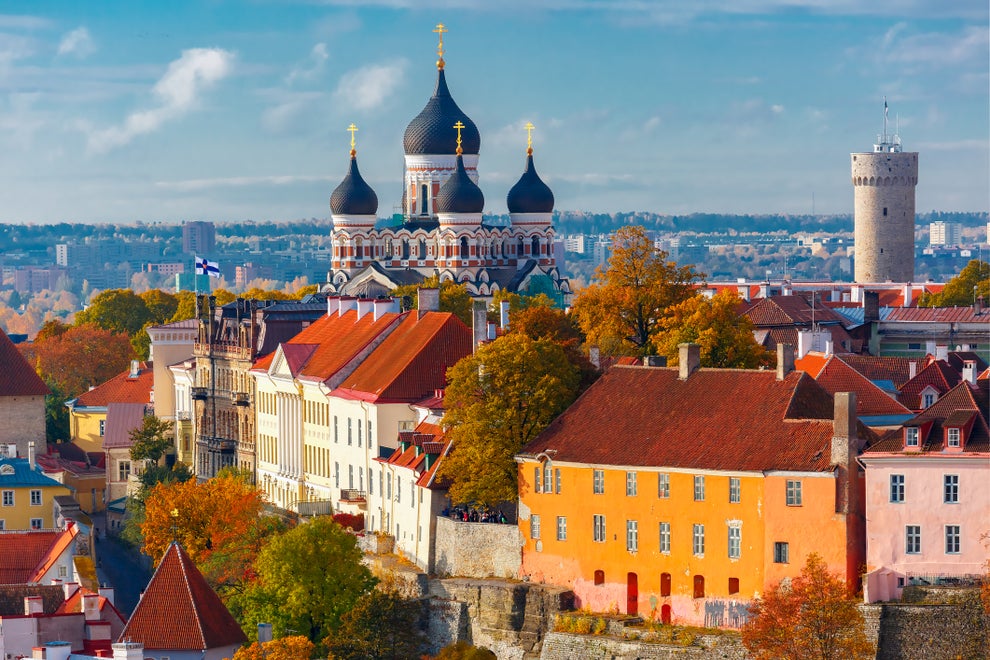
Tallinn named best city for remote workers | Remote working - The Independent

Helen Coffey, deputy head of travel for The Independent says, Its digital nomad visa helped Estonian capital top the list.

These are the best cities for remote workers
Photo: Getty Images/iStockphoto

Tallinn has been named the best city for remote workers in a new ranking.

The Estonian capital topped the list thanks in part to its new “digital nomad” visa, which allows workers to move there for a year provided they meet certain criteria.

Big 7 Travel, which came up with the top 50 list, also cited Tallinn’s “booming” digital economy and its low cost of living, with rent in the city centre costing around $500 (£370) a month...

Big 7 Travel said it compiled the list based on affordability, internet access, coworking spaces, expat-friendly communities and took into account destinations that had specific digital nomad visas.  

Read more...

Source: The Independent

The top ten best countries in the world to work from home in 2021 revealed | Nomads - Evening Standard

CANADA has been named the best country in the world to ‘work from home’ in 2021, thanks to its combination of fast broadband speeds, relatively affordable rents and migrant-friendly visa policies by Evening Standard.

Photo: Data provided by Circleloop

The Great White North comes top of the world league of destinations for so-called digital nomads, who have been able to embrace the trend towards full-time remote working accelerated by the pandemic.

Home to one of the largest tech hubs in the world, with Google and Mastercard looking to open new offices, it has a reputation as one of the friendliest countries in the world with 21.3% of its population made up of migrants and an overall ranking in the ‘world happiness index’ of 7.23...

The research was conducted by Circleloop, which said: "This year has seen everyone’s working lives being turned upside down, with the vast majority now working from home for the foreseeable future. But who said working from home had to mean from your country of origin? 

Read more... 

Source: Evening Standard

Friday, January 08, 2021

With Remote Work Continuing in 2021, RedThread Research Announces New Study on the Workplace Learning Tech Landscape | Releases - PR Web

Insightful research and additional 2021 HR predictions available through new membership platform, as PR Web writes.

Photo: Christina Morillo from Pexels

RedThread Research today announced the availability of its latest research report focusing on the rapidly changing workplace learning technology landscape, its growth over the past two years, and the impact of COVID-19 on many corporate learning and development (L&D) initiatives. The study, available in its entirety to RedThread Research members, details a different, more holistic approach to learning - involving more functionality and more vendors than ever before.

“In 2020, many organizations that had been planning a learning tech rollout over months or years were surprised by COVID-19, but then took advantage of the remote work environment to get more users up and running than they’d originally anticipated for the year,” said Dani Johnson, co-founder and principal analyst at RedThread Research. “Remote work is likely here to stay, and organizations continue to build out their learning tech ecosystems to keep their employees developing and evolving.”

The research reflects a survey completed by many learning technology vendors and several learning leaders and addresses how the learning technology market has grown and changed since the research firm’s last study on the topic in 2018. Important findings include:

  • Growth is Strong: Overall, the market has grown, in terms of number of vendors, number of users, number of functionalities, and revenue. This trend began pre-COVID and grew exponentially during the pandemic.
  • Less C-Suite Resistance: Company leadership is more likely to allocate budget toward continued employee development than it was two years ago. The result, more people are using HR technology to learn, grow, and plan their careers at work.
  • Easier Ways to Learn: The number of functionalities and the relative ease of integration has changed the way leaders are approaching learning technology purchases.
  • Expanding L&D Trends: Coaching, enablement, mobility, analytics, and skills technologies have increased, mirroring many of the trends in employee development the organization has seen over the past two years within organizations.

“HR professionals are definitely seeing leadership teams more involved and supportive of workplace learning and development as a way to retain and upskill our employees,” Johnson said. “Remote work felt like a triage response in 2020, but it is now firmly in place as part of organizational culture, and we’re seeing companies continue to invest in learning and growth as a way to help employees remain engaged, even when they aren’t in the office together.”

To learn more about this research report and the other data and insights provided to RedThread Research members, visit https://redthreadresearch.com/membership/.

An infographic with details about this report is available at https://redthreadresearch.com/learning-tech-update-2020-more-more-more/. 

Read more... 

Source: PR Web 

2020’s Biggest Stories in AI | AI Deep Learning - insideBIGDATA

In this contributed article by several data scientists from Vectra AI discuss 2020’s Biggest Stories in AI.

Photo: da zheng via Flickr  

2020 provided a glimpse of just how much AI is beginning to penetrate everyday life. It seems likely that in the next few years we’ll regularly (and unknowingly) see AI-generated text in our social media feeds, advertisements, and news outlets. The implications of AI being used in the real world raise important questions about the ethical use of AI as well.

So as we look forward to 2021, it is worth taking a moment to look back at the biggest stories in AI over the past year.

Read more...   

Source: insideBIGDATA

Why Epicureanism, not Stoicism, is the philosophy we need now | Ideas - New Statesman

This article is part of the Agora series, a collaboration between the New Statesman and Aaron James Wendland, senior research fellow in philosophy at Massey College, Toronto. He tweets @aj_wendland.


Philosophers have warned against pleasure since Plato, but Epicurean principles can be the basis of a humane politics aimed at security for all, according to Catherine Wilson, visiting presidential professor in philosophy at the City University of New York Graduate School.

Roman Epicurus bust
Photo: Wikipedia, the free encyclopedia

What ideas come to mind when you hear the word “Epicurean”? Probably: wine snob, gourmet cooking, foppish, superficial, idle, frivolous, decadent, selfish and, of course, pleasure-seeking. Pleasure – and the Epicurean philosophy in which it plays a central role – is a fixed star of philosophical disapproval. All the greats, from Plato to our modern theorists of well-being, not to mention the Fathers of the Early Church, warned, and still warn, against it.

Back then, the attacks on pleasure focused on the superiority of humans to other animals and on our special competencies, obligations and responsibilities. Pleasure is what the dumb, irrational animals pursue: eating, mating, loafing. We humans are made for higher, more difficult and sometimes more painful things, as the Stoics, the ancient opponents of the Epicureans, insisted: fortitude in adversity, self-control, intellectual labour, logical inferences, the contemplation of spiritual and immaterial entities. Today, the uneasiness about pleasure also reflects an aversion to consumerism and to the empty promises of advertisers who induce us to believe that this or that product or activity is the key to fun-filled days and restful sleep.

The use of reason, self-control and frugality are worthwhile aims and worth philosophising over...

What would an Epicurean world look like? It wouldn’t be based, as our world is, on the value of the speed and efficiency of output – the transformation of raw materials into consumer products and consumer products into rubbish, at whatever human cost. It would be focused on enhancing another form of utility, the creation of good experiences and the minimisation of pain. 

Read more... 

Recommended Reading

How to Be an Epicurean:
The Ancient Art of Living Well

Source: New Statesman

Thursday, January 07, 2021

Darwinism as the Root Problem of Modernity | Culture & Ethics - Discovery Institute

Editor’s note: The following, second in a three-part series, is adapted from an essay in National Review and is republished here with permission. Professor Aeschliman is the author of The Restoration of Man: C.S. Lewis and the Continuing Case Against Scientism (Discovery Institute Press). Find the full series here.


Shaw and Chesterton believed that the acceptance of Darwinism made it impossible to resist social Darwinism, plutocracy, imperialism, racialism, and militarism, argues author: M.D. Aeschliman - Evolution News.

Photo: G. K. Chesterton, via Wikimedia Commons.

Oscar Wilde (1854–1900), a witty Dublin Protestant-atheist Irishman like George Bernard Shaw, but of a very different class, stamp, and implication, wrote that natural science, “by revealing to us the absolute mechanism of all action, [frees] us from the self-imposed and trammeling burden of moral responsibility.” Wilde’s resultant, post-Christian aesthetic immoralism shocked and mocked the “earnestness” of late Victorian Britain in witty prose and plays, including the satirical wit (and homosexual implication) of The Importance of Being Earnest (1895). Both Shaw and G. K. Chesterton had an intimation that Wilde’s witty persiflage actually disguised deep decadence, an argument made brilliantly several decades later by the American Jewish moralists Philip Rieff (“The Impossible Culture: Wilde as a Modern Prophet,” 1982–83, reprinted in The Feeling Intellect, 1990) and Daniel Bell (The Cultural Contradictions of Capitalism, 1976; “Beyond Modernism, Beyond Self,” 1977). From Wilde came the Bloomsbury aesthetes and, we may say, nearly the whole world of the modern arts.

Yet both Shaw and Chesterton were themselves noted wits (both sometimes even accused of being paradox-mongering buffoons), and in fact Shaw shared much of the iconoclasm of his countryman Wilde, becoming a self-described feminist, Nietzschean, Ibsenite, and Wagnerite. But for Chesterton one of Shaw’s great achievements was his deep, abiding hatred of aestheticism — Shaw even insisted that the Puritan evangelist John Bunyan (The Pilgrim’s Progress) was a greater writer than Shakespeare, and frequently, unaccountably, made orthodox statements, such as “There is a soul hidden in every dogma” and “Conscience is the most powerful of the instincts, and the love of God the most powerful of all passions.” Along with T. S. Eliot’s Murder in the Cathedral (1935) and Robert Bolt’s A Man for All Seasons (1960), Shaw’s play St. Joan (1924) is one of the wisest, wittiest, and most sympathetic dramatic depictions of Christian religious belief in the last hundred years.

Both Shaw and Chesterton believed that the root problem of modernity was Darwinism, the acceptance of which made it impossible to resist its moral corollary, social Darwinism, and therefore plutocracy, amoral capitalism, imperialism, racialism, and militarism. Shaw wrote in the preface to Man and Superman (1903): “If the wicked flourish and the fittest survive, Nature must be the god of rascals.”...

Chesterton’s brief study of 1909 and its even briefer 1935 sequel were thus profoundly apt in assessing Shaw’s greatness and his folly. He saw that Shaw was really no democrat, that his admirable public spirit had in it something cold, abstract, theoretical, and even Platonist in the sense of Plato as an elitist authoritarian; whereas Chesterton himself was truly a kind of democrat, actually liking “the common man” and assuming that human beings across time had come to certain conventions, traditions, and sentiments that usually had in them some important truth. (This idea profoundly influenced the Chestertonian William F. Buckley Jr.)

Friday, “Shaw, Scientism, and Darwinism.” 

Read more...

Source: Discovery Institute

Anger as parents told to report schools to Ofsted if remote learning not good enough | Education - Manchester Evening News

Emma Gill, Manchester Evening News Family and Kids writer insist, Education Secretary Gavin Williamson says schools should be providing three to five hours of teaching a day, but his comments have not gone down well.

Home learning is back for most pupils
Photo: Getty Images

Parents have been told they can report schools to Ofsted if the remote learning they are being offered is not good enough.

Education Secretary Gavin Williamson made the comment in the House of Commons yesterday, where he said schools are expected 'to provide between three and five hours teaching a day, depending on the child’s age'.

While some have welcomed the move - including families who felt they were let down by a lack of support from schools during the last lockdown - it has caused anger among teachers and headteachers, with many saying they still haven't received the technology for pupils that the government promised...

Glyn Potts, head of Blessed John Henry Newman RC College in Oldham, highlighted a lack of laptops at this school last term when their allocation was cut from 173 to 35.

He says it's time the government stopped blaming schools and unions and worked together to support the future of young people.

"We need less rhetoric and more collaboration with school leaders to navigate this period," said Mr Potts.

"I would ask that government seeks the efforts of those in education rather than attacking the comments of one or two unions. Surely there is a common good to find here, this is about the future of young people.

Read more... 

Source: Manchester Evening News